
How Do I Clean A Burnt Stainless Steel Pot?
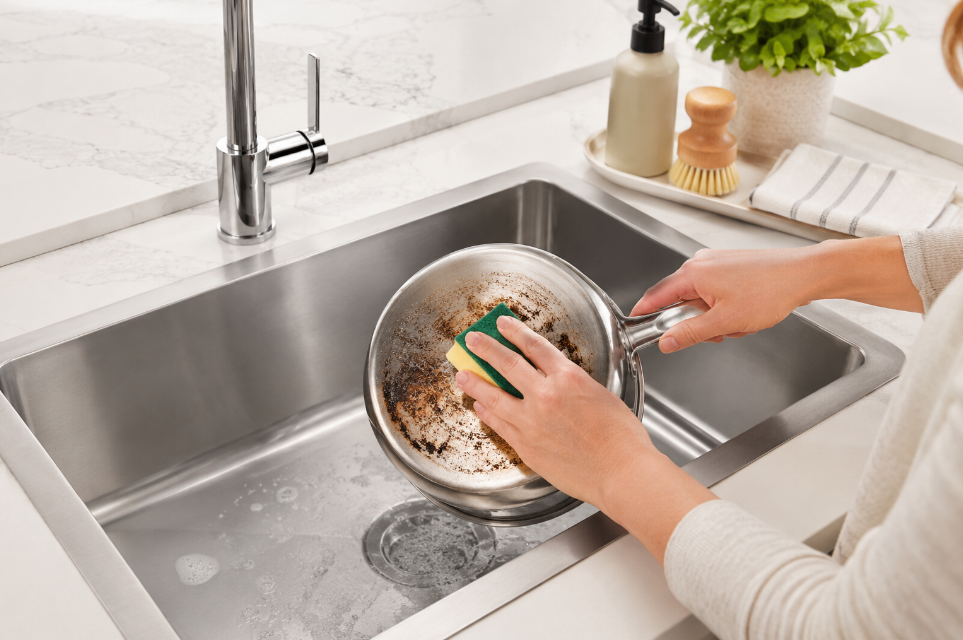
A burnt stainless steel pot can usually be restored without aggressive scraping. The dark layer forms when food sticks to the base, liquid evaporates, or the pot remains over high heat for too long.
The safest method is to soften the residue gradually. Knives, metal scrapers, coarse steel wool, and uncontrolled sanding may remove the burnt material, but they can also leave permanent scratches.
Allow the Pot to Cool
Do not place a very hot pot directly under cold water. A sudden temperature change may place stress on the cookware, especially when the pot has a bonded or multilayer base.
Remove the pot from the heat and let it cool until it can be handled safely.
Remove Loose Food
Use a wooden or silicone utensil to lift away food that releases easily.
Do not force the utensil beneath hard residue or scrape the base with a knife. Wipe away loose oil before adding water.
Soak the Burnt Area
Add enough warm water to cover the burnt section, followed by a small amount of dishwashing liquid.
Leave the pot to soak for approximately 20 to 30 minutes. A thicker layer may require a longer soaking period.
Simmer Water for Heavy Buildup
When soaking does not release the residue, add fresh water to the pot and heat it gently.
Allow the water to simmer for several minutes. The heat helps soften the burnt layer so that it can be removed more easily after the pot cools.
Do not allow the water to evaporate completely during this process.
Clean With a Non-Scratch Sponge
Pour away the dirty water and wash the pot with neutral detergent and a soft sponge.
Work in small sections and apply steady pressure. Several gentle cleaning attempts are safer than one aggressive scrubbing session.
Use a Baking Soda Paste
Mix baking soda with a small amount of water to create a soft paste.
Apply it to the remaining marks and leave it briefly. Rub gently in the direction of the existing stainless steel finish, then rinse thoroughly.
Do not mix baking soda with other cleaning chemicals unless the product instructions confirm that the combination is safe.
Rinse and Dry the Pot
Remove all detergent and cleaning residue with clean water.
Dry the pot immediately with a soft cloth. This prevents new water spots from forming and makes it easier to inspect the cleaned surface.
Repeat the Process When Necessary
A second soaking or simmering cycle may be required for a thick burnt layer.
Avoid increasing the abrasive force simply because some residue remains after the first cleaning.
How to Prevent Burnt Residue
Use a burner that matches the size of the pot base and reduce the heat after the contents begin boiling.
Stir thick sauces, rice, and other low-moisture foods regularly. Check the liquid level during long cooking periods and avoid leaving an empty pot over an active burner.
Why Sink Size Matters When Cleaning Cookware
Large pots are easier to soak, turn, and rinse when the sink provides sufficient bowl width and depth.
A Stainless Steel Kitchen Sink with a deep bowl can help contain splashing while providing more space for cookware, baking trays, and food-preparation tools.
Our product range includes single-bowl, double-bowl, top-mount, undermount, farmhouse, and drainer-style Stainless Steel Sinks for residential and commercial kitchens.
How Our Factory Supports Kitchen Projects
We provide stainless steel OEM manufacturing and product-development support for kitchen and home-furnishing projects.
Our manufacturing capabilities cover sheet processing, forming, laser cutting, welding, surface finishing, inspection, and packaging. Dimensions, bowl structures, drainage positions, steel thicknesses, finishes, and accessory combinations can be developed according to project requirements.
Request a Stainless Steel Kitchen Sink Proposal
Planning a kitchen collection, apartment project, hotel installation, or commercial food-preparation area?
Send us the required dimensions, bowl layout, installation type, steel thickness, surface finish, drainage structure, packaging method, and order quantity. We will prepare a suitable stainless steel kitchen Sink proposal.