
Is The Temperature Control Of Stainless Steel Wine Cabinets Reliable?
Reliable temperature control is the single most important requirement in a wine cabinet. Bottle orientation, shelving style, and exterior finish can improve convenience, but they cannot compensate for unstable temperature. When temperature fluctuates, wine expands and contracts, oxygen exposure increases, and aromatics fade faster. A cabinet that claims precision but cannot hold a stable setpoint under daily conditions is not protecting your collection.
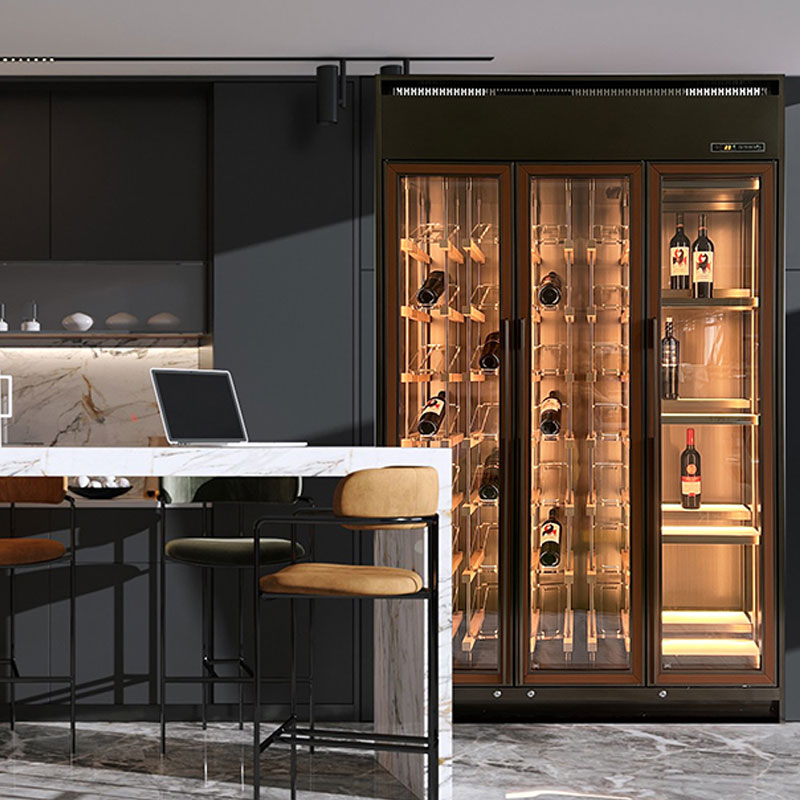
A Stainless Steel Wine Cabinet can be extremely reliable when the system is engineered as a complete temperature-control environment, not just a cold box. That means the compressor and air path must be matched to the cabinet volume, insulation must reduce heat gain, door construction must limit thermal leakage, and control logic must react smoothly instead of overshooting. The exterior material also matters because surface temperature and heat transfer affect how hard the cooling system must work.
If you want to learn more about our stainless steel wine cabinet configurations and options, you can view our product page here: stainless steel wine cabinet
1. What Temperature Reliability Really Means in Daily Use
Many people judge temperature performance by whether the cabinet feels cold. That is not reliability. Real reliability shows up in how consistently the cabinet holds the target temperature through normal disturbances such as door openings, room temperature changes, and different loading levels.
A reliable wine cabinet should deliver these outcomes in real life:
It reaches the set temperature efficiently without large swings.
It maintains stability when the ambient temperature changes day to night.
It recovers smoothly after door openings without repeatedly overshooting.
It distributes temperature evenly across shelves so bottles do not experience hot and cold zones.
Consistency matters more than chasing extreme cold. Most wine storage targets are moderate, and the cabinet’s job is to hold that range with minimal fluctuation. When the system is stable, you also get less vibration, fewer start-stop cycles, and a quieter operating profile, which is important for long-term storage environments.
2. Why Stainless Steel Can Support More Stable Control
Stainless steel is often chosen for appearance and durability, but it also contributes to stable operation when paired with a well-designed thermal structure. The cabinet shell is a part of the heat-management system. A stable cabinet is one that reduces external heat intrusion so the compressor does not need to over-correct.
A Stainless Steel Cabinet body offers practical advantages:
It resists deformation and maintains consistent door alignment over time, which helps preserve sealing performance.
It handles daily contact, moisture, and cleaning without degrading, which helps keep surfaces and edges intact around seals and trim.
It supports premium surface treatments that improve resistance to fingerprints and wear, which matters for long-term appearance in kitchens and hospitality spaces.
Material alone does not guarantee accuracy, but it improves the cabinet’s structural consistency, which supports steady sealing and predictable cooling behavior across years of use.
3. Cooling System Design Determines Whether the Setpoint Holds
Temperature control reliability starts with the cooling core. A cabinet that is under-powered will struggle in warmer rooms, while an overpowered system can create frequent cycling and overshoot if the control logic is not tuned correctly.
A dependable wine cabinet is built around a cooling system that focuses on controlled stability:
The compressor capacity should match cabinet volume and expected heat load.
The evaporator and airflow path should be designed to remove heat evenly, not just near the cold source.
The fan and ducting should distribute air gently so shelves stay consistent without drying corks or creating sharp gradients.
The control algorithm should avoid aggressive swings by using steady corrections rather than abrupt on-off spikes.
JOINT POWER wine cabinets are engineered as full systems, with the cabinet structure and cooling path designed to work together. That system-level approach is what turns stainless steel construction into real temperature stability.
4. Insulation and Internal Layering Reduce Fluctuations
Even a strong compressor cannot create stability if the cabinet constantly absorbs heat from the outside. The less heat entering the cabinet, the smaller the correction needed. Smaller corrections lead to fewer swings and more reliable temperature behavior.
Our stainless steel wine cabinet construction focuses on insulation and layered stability:
Thermal insulation polyurethane reduces heat transfer through the cabinet body, lowering the workload on the cooling system and improving setpoint stability.
Transparent acrylic internal layering supports interior structure and can help guide airflow in a predictable way, which supports shelf-to-shelf consistency.
A well-insulated cabinet recovers faster after door opening because the interior temperature does not collapse as quickly.
This is why insulation quality is often the hidden difference between a cabinet that looks premium and a cabinet that performs like a true storage environment.
5. Door Engineering Is a Major Factor in Temperature Reliability
The door is the largest thermal risk area in most wine cabinets. If the door leaks heat or the seal weakens, the cabinet will show frequent cycling, uneven shelf temperatures, and unstable control behavior. A reliable wine cabinet treats the door as an engineered barrier.
JOINT POWER stainless steel wine cabinets use a door structure designed to reduce thermal leakage:
Hollow electric glass supports insulation performance while offering a premium display experience.
A stable door assembly protects the internal temperature from sudden ambient changes.
Consistent door fit helps maintain sealing performance, which prevents slow heat creep that forces repeated compressor corrections.
In practical use, a well-built door is one of the most important reasons a cabinet can hold a steady temperature across seasons and room conditions.
6. Control Features That Improve Real Reliability
Temperature control is not only hardware. The user experience depends on how the cabinet responds to everyday behavior. Small details determine whether the cabinet is stable when used the way people actually use it.
A reliable cabinet should support:
Smooth temperature recovery after the door opens, without sharp overshoot.
Stable operation at typical household and commercial ambient conditions.
Low vibration and reduced cycling stress, which supports long-term component life.
Clear visibility and user-friendly control so the setpoint is easy to maintain.
Energy-saving lighting also matters for stability. Lighting that generates less heat reduces internal heat load, which means the cooling system performs fewer corrections. Our cabinets include energy-saving lighting to support both usability and thermal consistency.
JOINT POWER Advantages and Customization Options
A wine cabinet must fit both the collection and the installation environment. Standard sizes are not always enough, especially for projects with built-in cabinetry, commercial display requirements, or premium interior design goals. Customization is also important for matching different wine types, bottle shapes, and storage habits.
JOINT POWER stainless steel wine cabinet advantages include:
304 stainless steel construction for durable performance and long-term structural stability.
Deep PVD vacuum plating with a no-fingerprint surface for premium appearance that stays clean in high-touch environments.
Thermal insulation polyurethane to reduce external heat gain and support stable temperature holding.
Hollow electric glass door to balance display visibility with insulation performance.
Transparent acrylic internal layering to support predictable interior structure.
Energy-saving lighting to reduce internal heat load and improve thermal consistency.
Customization options can be configured to match project needs:
Size customization for built-in installations, freestanding layouts, or space-limited kitchen designs.
Internal layout customization including shelf structure and zone planning to match bottle types and usage frequency.
Finish customization including premium surface options and color styles, such as brushed gunmetal black.
Component matching for different cabinet volumes and ambient environments, supporting stable temperature performance across use cases.
If you need more information about available configurations, finishes, and customization support, you can visit our product page here: stainless steel wine cabinet
Conclusion
Temperature control in a stainless steel wine cabinet can be highly reliable when the cabinet is engineered as a stable thermal environment. The cooling system must be matched to the cabinet, insulation must minimize heat intrusion, the door must protect the interior from ambient influence, and the control behavior must stay steady under real use. Stainless steel construction adds structural consistency and durability, helping seals and alignment remain stable over time.
JOINT POWER stainless steel wine cabinets combine premium materials, insulation-driven stability, and customizable configurations to support dependable temperature control and long-term wine protection. If you want to explore sizes, finishes, and customization choices, you can view our solutions here: stainless steel wine cabinet