
Are Granite Composite Sinks Better Than Stainless Steel?
Granite composite sinks are often promoted as a premium alternative to stainless steel, especially in modern kitchens that emphasize visual consistency and matte textures. Stainless Steel Sinks, however, continue to dominate both residential and commercial kitchens worldwide due to their durability, adaptability, and predictable long-term performance.
Rather than asking which material is better in general, a more useful question is which material performs better under real kitchen conditions. This article compares granite composite sinks and stainless steel sinks from a functional, long-term use perspective, with a focus on why stainless steel remains the preferred option for many buyers and project developers.
Material Structure and Mechanical Behavior
Granite composite sinks are produced by combining mineral particles with polymer resin and molding the mixture into a fixed shape. This creates a dense, rigid basin with a stone-like appearance. While the surface hardness is high, the structure itself is relatively rigid and has limited ability to absorb sudden mechanical stress.
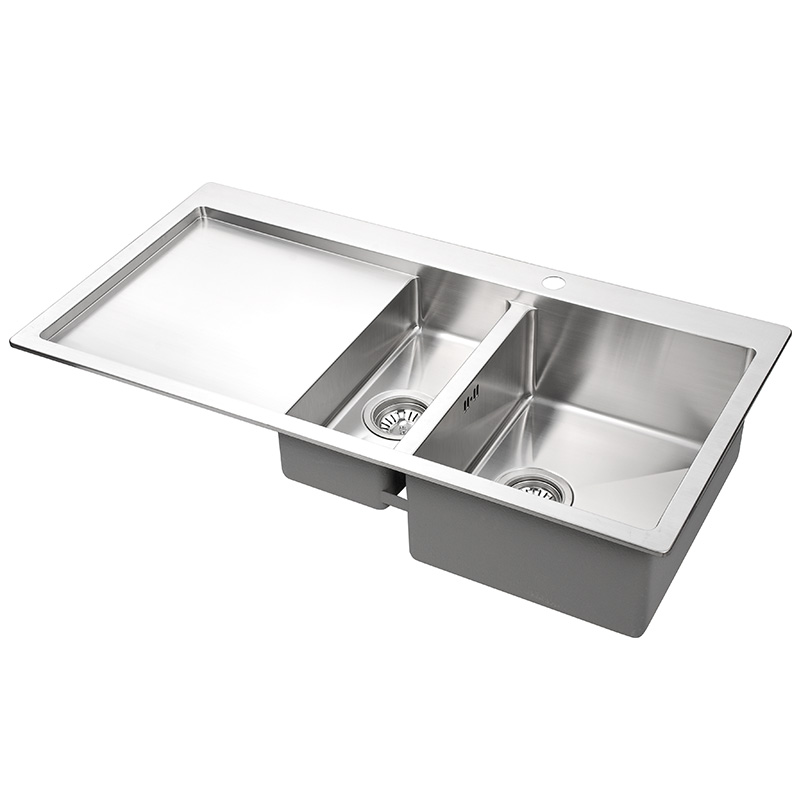
Stainless steel sinks are formed from corrosion-resistant steel sheets that are pressed and shaped into bowls. The metal structure allows slight flexing under impact, which reduces the likelihood of cracking or permanent structural damage. This flexibility is one of the reasons stainless steel performs well in high-usage kitchens.
Impact Resistance in Daily Kitchen Use
Kitchen sinks are exposed to frequent contact with cookware, dishes, and cleaning tools. Granite composite performs well against surface abrasion but can be vulnerable at corners, edges, and drain areas when struck sharply by heavy objects.
Stainless steel tolerates repeated impacts more effectively. While cosmetic marks may appear over time, the material rarely fractures or loses functional integrity. This makes stainless steel particularly suitable for households that use heavy cookware or wash large items regularly.
Heat Shock and Temperature Stability
Granite composite sinks are often described as heat resistant, but heat resistance and heat shock resistance are not the same. Sudden temperature changes, such as pouring boiling water into a cool basin or placing hot cookware into standing water, can stress resin-based materials.
Stainless steel responds more predictably to temperature changes. The metal expands and contracts without creating internal stress fractures, which significantly reduces the risk of long-term damage caused by repeated thermal cycles.
Stain Behavior and Cleaning Requirements
Granite composite sinks tend to hide water spots and fingerprints better due to their matte finish. However, lighter colors may develop limescale deposits, oil stains, or discoloration over time, particularly in regions with hard water. Some cleaning agents may also affect surface appearance if used improperly.
Stainless steel surfaces are non-porous and easy to clean using common household products. Although water spots may be more visible, they can be removed consistently without damaging the surface. This predictability is important for users who want low-maintenance upkeep.
Scratch Visibility and Surface Aging
Granite composite resists light scratches well during early use, especially in darker finishes. Over time, areas exposed to repeated friction may develop polished zones that contrast with the surrounding surface.
Stainless steel can develop fine scratches, but these typically blend into the brushed finish. As the sink ages, wear tends to appear uniform rather than localized, which helps maintain an acceptable appearance over many years of use.
Noise Control and Installation Factors
Granite composite sinks naturally dampen sound due to their thickness and mass. Stainless steel sinks require proper sound insulation to achieve similar noise reduction. When engineered correctly, sound-deadening pads and coatings effectively reduce vibration and water impact noise.
Weight is another practical consideration. Granite composite sinks are heavy and require stronger cabinet support and careful installation planning. Stainless steel sinks are lighter, easier to handle, and impose less structural load on cabinetry.
Long-Term Reliability in Real Kitchens
Material consistency, manufacturing precision, and design quality play a significant role in sink performance. Granite composite quality can vary significantly depending on resin formulation and production control.
Stainless steel sinks offer more consistent results across manufacturers, especially when produced using proven grades and forming techniques. This reliability is why stainless steel is widely used in both residential kitchens and demanding commercial environments.
Buyers looking for durable, project-ready options can explore the full range of JOINT POWER stainless steel sinks, designed to balance structural stability, surface performance, and long-term usability.
Conclusion
Granite composite sinks are not inherently better than stainless steel. They offer a different balance of aesthetics and surface hardness but introduce considerations related to brittleness, heat shock sensitivity, and installation weight.
Stainless steel sinks remain a dependable choice for users who prioritize durability, thermal stability, easy maintenance, and long-term performance. When properly engineered, stainless steel delivers consistent results across a wide range of kitchen environments.
For buyers seeking proven functionality with predictable aging behavior, JOINT POWER stainless steel sinks provide a reliable solution that aligns with real-world kitchen demands rather than short-term design trends.