
What Gauge Stainless Steel Sink Is The Best
When selecting a Stainless Steel Sink, one of the most decisive yet often overlooked factors is its gauge. The gauge determines how thick the metal sheet is, influencing everything from noise control and dent resistance to long-term durability. Understanding this single metric can help you make an informed choice that balances performance, aesthetics, and cost.
At our factory, which integrates Swiss Bystronic laser equipment, CNC intelligent manufacturing, and German welding technology, we produce sinks designed to meet the highest standards of precision. With over four decades of stainless steel expertise and ISO9001 certification, we have developed a range of sinks that deliver exceptional performance for both residential and commercial use.
1. What Does Gauge Mean in Stainless Steel Sinks?
The gauge represents the thickness of the stainless steel sheet used in your sink. A lower gauge number means thicker steel. For instance, 16-gauge steel is thicker and heavier than 18- or 20-gauge.
Thickness influences how the sink behaves under weight, vibration, and temperature changes. The difference might seem minor—just fractions of a millimeter—but it dramatically affects performance in real-world use.
A thicker gauge:
Withstands heavy pots, pans, and sudden impact.
Minimizes vibration and sound when water hits the surface.
Offers better rigidity, preventing bending or flexing over time.
A thinner gauge:
Costs less and is lighter, suitable for smaller or less frequently used sinks.
Can produce more sound when in use.
Is more prone to dents or deformation.
Most homeowners choose 16 or 18 gauge for an ideal mix of strength and smoothness, while 20 gauge is typically used in budget or utility sinks.
2. Why Gauge Matters for Sink Performance
Gauge is more than just a number—it defines how the sink performs in everyday use. From durability to maintenance, the thickness of the steel plays a key role in comfort, functionality, and longevity.
Strength and Stability
A 16-gauge sink can handle frequent, heavy-duty kitchen tasks without denting or warping. It’s ideal for households or commercial kitchens that wash large cookware daily. In contrast, thinner 20-gauge sinks may flex under weight, showing small surface distortions over time.
Noise and Comfort
Thicker sinks produce a deeper, softer sound when water flows, making the kitchen experience quieter and more refined. To enhance this effect, our sinks include sound-dampening pads and insulation coatings, engineered with 5S lean production management to ensure uniform noise absorption across all corners.
Maintenance and Longevity
While gauge does not directly dictate corrosion resistance (that depends on the stainless steel grade), a thicker sink has more material to resist wear, scrubbing, and long-term stress. It simply lasts longer before showing signs of fatigue, ensuring decades of use without losing structural integrity.
Aesthetic and Practical Balance
Thicker steel allows for sharper edges, smoother curves, and more consistent polishing, which creates a higher-end appearance. It also provides more stability for flush or under-mount installation, maintaining a seamless countertop finish that looks elegant even after years of use.
3. Choosing the Right Gauge for Different Uses
Not all kitchens have the same requirements. The ideal gauge depends on how much wear and load the sink will face and how you prioritize performance versus budget.
Residential Kitchens
For most homes, 18-gauge sinks provide a reliable and affordable solution. They offer ample strength for daily cooking and cleaning while being light enough for quick installation. The surface stays smooth and polished without excessive weight on your countertop.
Professional and Heavy-Duty Environments
Restaurants, hotels, and catering facilities benefit from 16-gauge stainless steel. These sinks endure continuous water flow, frequent scrubbing, and impact from cookware without denting. Their rigidity prevents vibration, creating a steady work surface for high-volume cleaning.
Utility and Secondary Spaces
If the sink is meant for less demanding applications—like a garage or laundry room—20-gauge may suffice. It is lightweight and cost-effective, though not built for the heavy strain of a main kitchen sink.
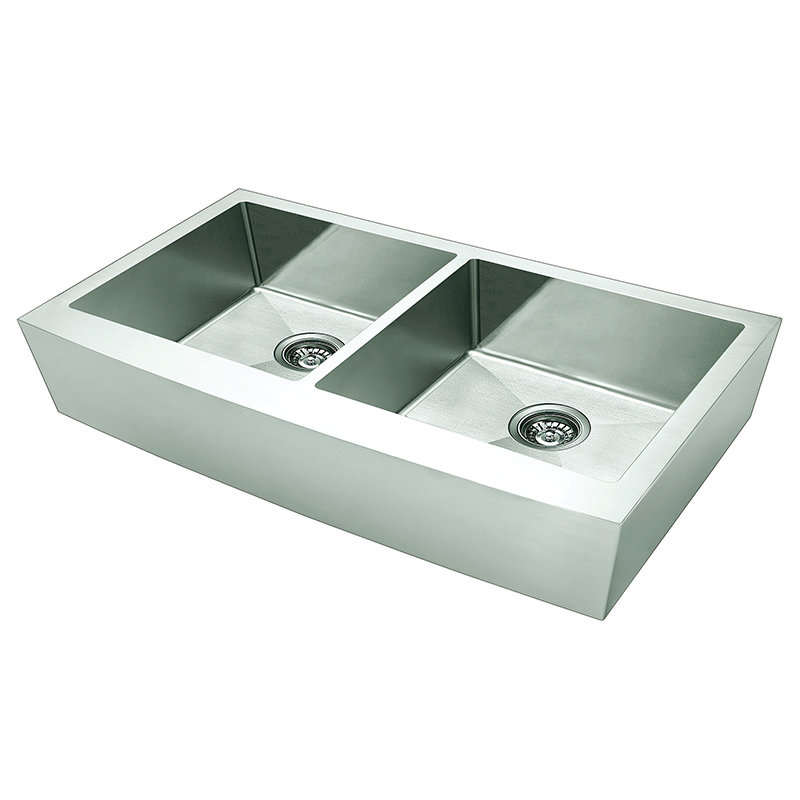
When designing large or custom configurations, such as Farmhouse Sinks or double basins, using a thicker gauge ensures long-term stability and uniform welds.
4. Why Our Stainless Steel Sinks Stand Out
Our approach combines craftsmanship, precision, and intelligent engineering. We are committed to producing stainless steel sinks that not only perform exceptionally well but also express refined aesthetics.
Advanced Fabrication Systems
We operate with internationally recognized CNC automation and Swiss laser cutting equipment to maintain precise gauge uniformity. Every sink undergoes high-accuracy shaping and trimming, ensuring perfect geometry and clean corners. This meticulous control gives each model a solid structure and a flawless surface finish.
German Welding and Polishing Expertise
Our sinks are welded using German TIG technology, resulting in seamless joints and reinforced corners. Each weld is hand-inspected and polished by skilled technicians to prevent leakage, cracking, or unevenness. The result is a sink that feels substantial, quiet, and smooth to the touch.
Premium Materials and Finishing
All sinks are manufactured with AISI 304 stainless steel, known for its balance of chromium and nickel. This alloy provides natural resistance to corrosion and stains. We apply multiple surface treatments—brushed, satin, or matte—to suit different interior designs, all while maintaining easy-to-clean properties.
Quality, Consistency, and Craftsmanship
Our production lines follow 5S and lean management principles, ensuring efficiency and stability from sheet forming to final polishing. Every step reflects our mission:
To become the world’s most trusted manufacturer of premium stainless steel solutions.
Conclusion
The best gauge for a stainless steel sink depends on its intended use, but the ideal range remains clear:
16-gauge provides maximum strength, sound control, and professional-grade durability.
18-gauge offers the best value for home kitchens, combining balance and longevity.
20-gauge works only for light-duty or secondary installations.
A well-designed sink is more than metal—it’s a crafted piece of everyday engineering. With our advanced manufacturing systems, certified quality control, and decades of craftsmanship, every stainless steel sink we produce achieves precision, stability, and elegance.
Our sinks are built not just to last, but to redefine what durability and refinement mean in the modern kitchen.