
What Is An Undermount Sink?
An Undermount Sink is a sink installed beneath the countertop rather than sitting on top of it. From above, the counter edge remains visible and clean, while the sink bowl is fixed below the cutout. This installation method is popular in modern kitchens because it creates a smoother visual line and makes it easier to wipe water, food scraps, and daily mess directly into the bowl.
For buyers, however, the discussion is not only about appearance. It is also about countertop compatibility, installation cost, long-term sealing performance, and how the sink will behave in real projects. That is why this topic matters not only to end users, but also to importers, contractors, cabinet makers, wholesalers, and private label buyers. In practical sourcing, many customers who ask about undermount sinks are also evaluating bowl configuration at the same time, especially when considering a 1.5 bowl undermount sink for kitchens that need both washing capacity and separation of tasks.
Why Undermount Sinks Attract So Much Attention
The appeal of an undermount sink starts with usability. Because the rim does not sit above the counter surface, cleaning feels easier and the worktop looks more continuous. In kitchens where users prepare food often, that convenience becomes a real selling point. Crumbs and water can be pushed straight into the sink without getting trapped around a raised edge.
There is also a strong design reason. Undermount installation usually gives the kitchen a cleaner and more built-in look. In premium residential projects, custom kitchens, and upgraded apartment interiors, that visual effect matters a great deal. Buyers in these segments are usually not comparing sinks by size alone. They are comparing finish, layout, installation style, and how the sink supports the overall kitchen design.
How Undermount Differs From Topmount
The biggest difference is installation position. A Topmount Sink rests on the countertop with its rim visible from above. An undermount sink is fastened below the cutout so the counter surface remains uninterrupted. This sounds like a simple structural change, but it affects the full buying decision.
Topmount installation is often easier and more forgiving in many renovation or cost-sensitive projects. It can be practical for apartments, rental upgrades, and fast-turnaround jobs where installation efficiency matters. Undermount sinks usually require more careful countertop preparation and stronger attention to sealing and support. That can increase labor expectations, but it also creates a more refined final result.
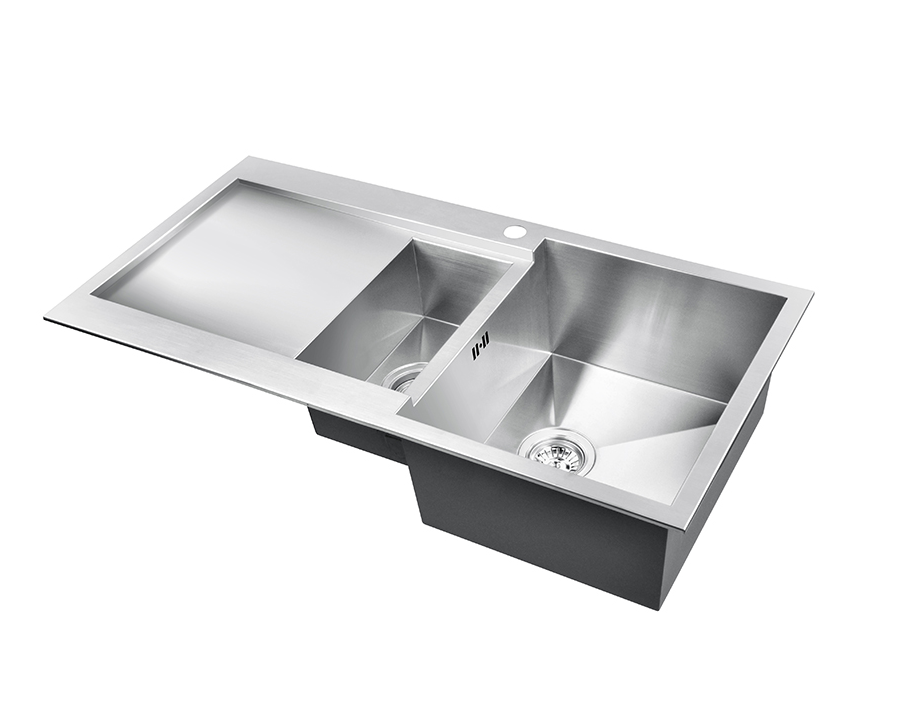
This is where our product can be introduced naturally. Our 1.5 bowl Stainless Steel Sink is a topmount model, but the bowl combination itself is highly relevant to buyers who are considering undermount options too. In real procurement, many buyers first decide the functional layout they want, then compare which mounting style fits their market, budget, and installation environment better.
Why A 1.5 Bowl Layout Is So Practical
A 1.5 bowl sink gives users two working zones without requiring the full footprint of a large equal-double-bowl design. The main bowl handles larger cookware and everyday washing, while the smaller bowl supports separate rinsing, food prep, or temporary soaking. This is one reason the layout remains attractive in family kitchens, apartments, and light commercial spaces.
For B-end buyers, this structure solves a common problem. Many customers want separation, but they do not want to lose too much countertop space. A 1.5 bowl undermount sink is often considered because it keeps the kitchen looking modern while still offering more flexibility than a single bowl. In compact or medium-size kitchens, that balance can be much easier to sell than an oversized two-bowl sink that demands more cabinet width.
Why Buyers Should Think Beyond Appearance
Undermount sinks are often chosen for looks first, but long-term value depends on more than style. Buyers need to consider countertop material, edge finishing, support method, drainage flow, and how easy the product will be to install consistently across projects. A sink that looks elegant in a brochure can become difficult in real use if the installation conditions are not suitable.
That is especially important in larger-volume purchasing. Developers, cabinet suppliers, and project contractors need products that can be installed efficiently and supported after delivery. If the sink choice creates avoidable fitting issues, sealing complaints, or mismatched cabinet planning, the cost rises quickly. This is why experienced buyers often compare bowl structure and installation style together instead of treating them as separate decisions.
Where A 1.5 Bowl Sink Fits Best
The 1.5 bowl layout works especially well in kitchens where users need both washing space and functional separation. Residential apartments, family kitchens, office tea rooms, and some light food preparation spaces all benefit from this arrangement. The extra small bowl may not seem dramatic at first, but in daily use it often becomes the part that improves workflow the most.
That is why this layout stays strong in both topmount and undermount categories. Some customers prefer topmount because it simplifies installation and project control. Others prefer a 1.5 bowl undermount sink because it offers a cleaner countertop line and a more premium presentation. The right choice depends less on trend and more on how the kitchen will actually be built and used.
Why Material And Finish Still Matter
No matter which mounting style is chosen, the sink still needs to perform under daily wear. Buyers usually care about scratch visibility, water marks, cleaning convenience, and how well the finish holds up over time. In practical sales, these issues often matter more than the installation type after the sink has been used for several months.
This is why stainless steel remains a strong option in many markets. It fits modern kitchens, supports a wide range of cabinet styles, and works well across residential and project channels. For wholesalers and distributors, it also makes product positioning easier because stainless steel sinks can serve both value-oriented and upgraded product lines depending on finish, gauge direction, and accessory package.
Why OEM And ODM Matter In Sink Sourcing
Many buyers do not want only a standard sink in a plain box. They may need specific bowl proportions, finish details, packaging direction, or branding support to match their own market. This is where OEM and ODM support become a real advantage. A supplier who can adapt product presentation and project details gives the buyer more flexibility and reduces the risk of market mismatch.
This matters especially in sink categories because installation expectations differ from region to region. Some markets are more familiar with topmount. Others strongly prefer undermount. Some channels focus on retail packaging, while others care more about project consistency and repeat specifications. A supplier should be able to support these differences instead of forcing every buyer into the same fixed solution.
Why Buyers Often Compare Topmount And Undermount Together
In actual business, sink sourcing rarely starts with only one question. A buyer may begin by asking what an undermount sink is, but the real need is often broader. They may be deciding between design styles, installation methods, and practical bowl combinations for a certain customer group. That is why topmount and undermount products are often compared side by side during quotation and development.
Our product is relevant in that process because a 1.5 bowl stainless steel layout gives buyers a strong functional reference point. Even when a market is interested in a 1.5 bowl undermount sink, the same questions still apply. Will the kitchen need one large bowl and one support bowl? Will installation speed matter? Will the project require easier replacement in renovation work? These are the decisions that shape the final order.
Choosing A Supplier For Long-Term Business
A sink supplier should offer more than one installation style or one attractive image. Buyers also need communication, consistency, and practical support through sampling, order confirmation, and repeat production. Common pain points in sink procurement include unstable finish quality, unclear accessory supply, slow technical response, and products that look right in samples but create extra work in real installation.
That is why long-term cooperation matters. A reliable supplier helps buyers reduce risk, align product details with market needs, and improve project execution over time. In kitchen products, that kind of stability is often more valuable than chasing the lowest first quote.
Conclusion
An undermount sink is a sink installed below the countertop to create a cleaner look and easier surface cleaning. It is popular for modern kitchens, but the right choice always depends on more than style alone. Buyers still need to weigh installation conditions, countertop compatibility, project efficiency, and the functional layout of the bowl.
That is why the discussion around a 1.5 bowl undermount sink is so important. The layout gives users more flexibility, while the installation style shapes the final kitchen experience. If you are comparing sink structures for wholesale, project supply, retail development, or OEM and ODM cooperation, feel free to contact us. We can help review bowl configuration, mounting direction, and product positioning so you can choose a sink solution that fits your market more accurately.
Previous: